How Terre de Mars Proves the Effectiveness of Its Organic Cosmetics
An organic skincare product can smell wonderfully good, display an impeccable ingredient list, and still remain perfectly ineffective. That is the silent limit of the market: naturalness reassures, but it says nothing about what the formula actually does on the skin. At Terre de Mars, we chose to answer that question with measurement rather than promises.
This article opens up the behind-the-scenes of our approach. You will find the regulatory framework we follow, the two families of tests we run, how to read a result without being misled, and what scientific proof will never replace in a skincare ritual built around coffee. Take it as a guided tour of our standards.
Why proving efficacy changes everything in organic beauty
The natural cosmetics sector was built on a healthy response: fewer controversial substances, clearer sourcing, and more responsible manufacturing. That commitment is sound, but it has created a blind spot. Many brands are content to guarantee what the formula does not contain, without ever demonstrating what it delivers.
A certified organic formula is not inherently more effective than another. Its quality depends on the choice of active ingredients, their concentration, and their stability in the finished product. A great ingredient that is poorly dosed or badly preserved loses most of its value. Proving efficacy therefore means closing that blind spot: checking that beyond the ingredients list, the product does what its name promises.
This proof is also in your direct interest. It keeps you from paying for a supposed effect, gives you a concrete benchmark for comparing two products, and turns a confident purchase into an informed decision. On a shelf where everyone makes promises, verifiable data becomes a rare point of reference again.
Lastly, it protects the brand itself. A claim that could not be substantiated would expose Terre de Mars to regulatory risk and, above all, a loss of trust. Rigor is not a luxury; it is a responsibility.
What happens even before the first test
Efficacy proof never comes at the start of a project. It comes to validate a long formulation process, and it is worth saying so to understand what our tests really confirm.
Every formula starts with a precise intention: cleanse without drying out, nourish, soothe a sensitive scalp. Our teams select the active ingredients based on that goal, then adjust concentrations, texture, and stability. A formula must retain its properties from first use to last, which requires long-term stability checks.
Next comes safety assessment, a mandatory step before any product can go to market. Only once that foundation is in place can the question of efficacy be put to an independent laboratory. Testing a product therefore means validating the final step of a staircase that has already been long.
The regulatory framework behind our claims
In Europe, no brand can freely claim that a skincare product hydrates, soothes, or protects. Every claim engages the manufacturer's responsibility and must be based on a documented proof file that is kept on record.
Our products are developed in compliance with Regulation (EC) No 1223/2009, the text governing all cosmetic products placed on the European market. It requires a product information file, a safety assessment, and justification for every claim made on the packaging or online.
Our clinical studies also follow the principles of the Declaration of Helsinki, the ethical reference framework for research involving volunteers. In practical terms, this ensures the participants' informed consent, respect for their health, and traceability of the protocol, from recruitment through data analysis.
This foundation is anything but secondary. It separates a defensible claim from an advertising pitch, and that is exactly the line we refuse to cross, even when a flattering number might tempt us to.

The two families of tests we run
Efficacy proof never relies on a single indicator. We combine two complementary approaches, carried out by independent laboratories, because they shed light on different aspects of the same product.
Consumer tests under real-life conditions
These studies are entrusted to the Eurolab laboratory. A panel of volunteers uses the product at home for several weeks, under normal routine conditions. At the end of the period, each person evaluates specific criteria: comfort, tolerance, texture, staying power, and after-use feel.
The strength of this method lies in how closely it reflects reality. It measures the experience as you will live it in your bathroom, not in the artificial environment of a laboratory. An effective but unpleasant skincare product ends up forgotten in the back of a cupboard: ease of use matters just as much as raw performance.
Its limitation is equally clear: it captures a feeling, and therefore a self-reported data point, which must be interpreted rigorously. High satisfaction reflects strong approval, without on its own proving a measured transformation of the skin. That is why it never stands alone.
Instrumental measurements by corneometry
To quantify an effect objectively, we work with SGS IDEA Tests and corneometry. This technique measures the hydration level of the upper layers of the epidermis using a probe, before application and at defined intervals, by comparing the treated area with a control area.
The results speak for themselves: our relevant skincare products show up to +36 % hydration of the upper layers of the epidermis, on panels of 12 to 22 volunteers depending on the product. The probe feels nothing and states nothing: it records a measured, verifiable, and reproducible change.
Where consumer testing captures perception, corneometry captures data. Combining the two gives an honest reading: a product that volunteers find pleasant and whose hydrating effect is truly measurable. One without the other would always leave an open question.
How to read a test result without getting it wrong
An isolated percentage means nothing unless you know what it covers. Three simple reflexes are enough to avoid the most common pitfalls, whether you are reading our results or another brand's.
- Check what is being measured. A gain in superficial skin hydration is not deep hydration. Satisfaction with texture says nothing about the product's efficacy. The verb used must match exactly what was tested.
- Look at the size and nature of the panel. An effect observed in a few people carries less weight than an effect found in a larger, documented group. The number of volunteers should always be available.
- Distinguish between instrumental measurement and subjective perception. Both are useful, but they do not prove the same thing and never replace one another. A satisfaction score presented as proof of efficacy mixes two different categories.
We apply this framework to our own results before any publication. When a data point deserves nuance, we spell it out rather than hide it. A number that would need an asterisk too long to be honest simply will not be highlighted. That is the condition for proof to remain proof.
Our results, product by product
The studies first focused on the formulas used most often in everyday life, those whose effects can be felt within the first few weeks and whose frequency of use justifies verification.
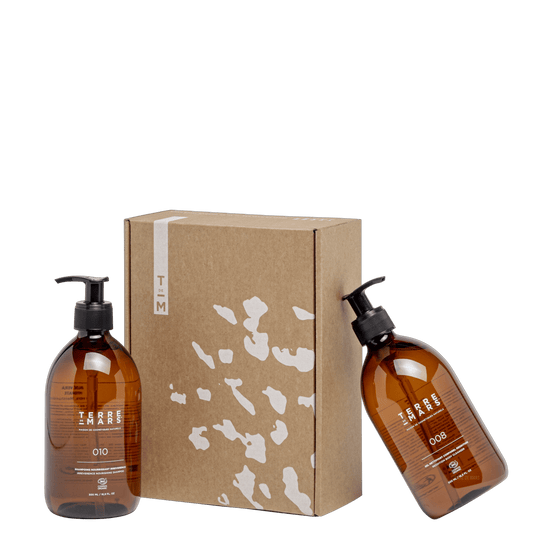
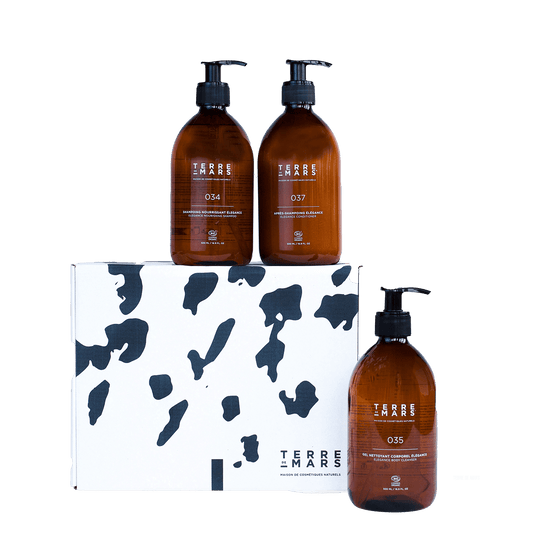
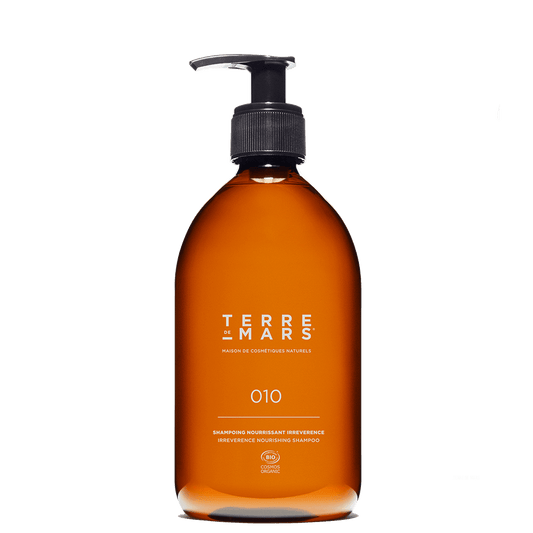
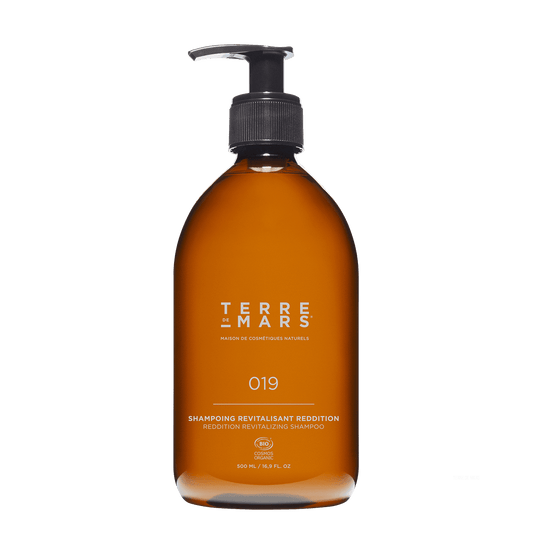
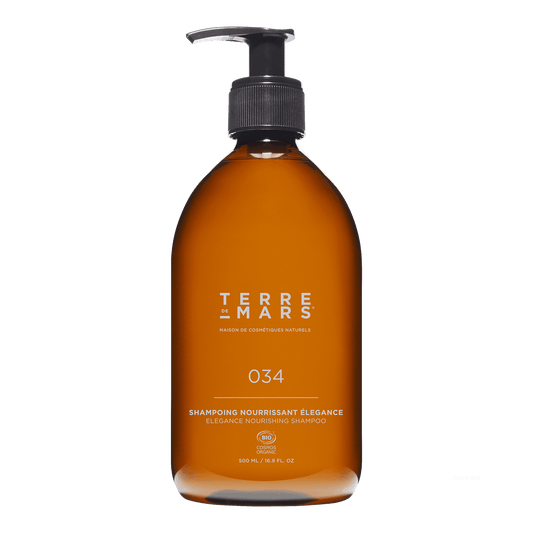
- For hair care, our shampoos were evaluated under real-life conditions: the Irrévérence Nourishing Shampoo, the Reddition Revitalizing Shampoo and the Elégance Nourishing Shampoo, with particular attention to scalp comfort.
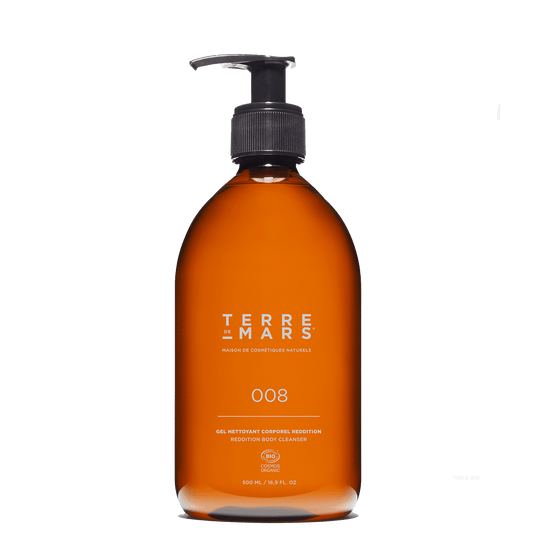
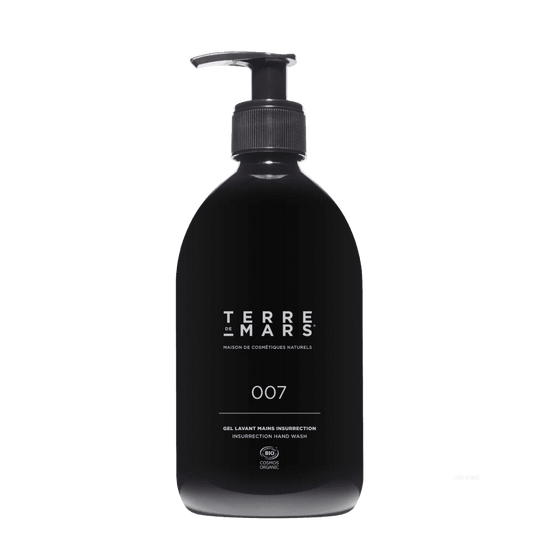
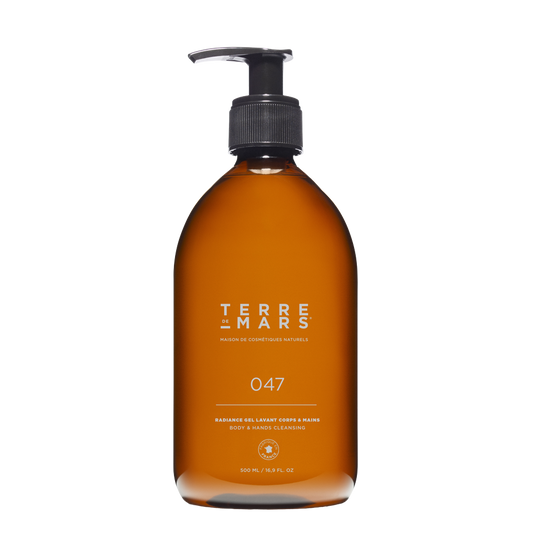
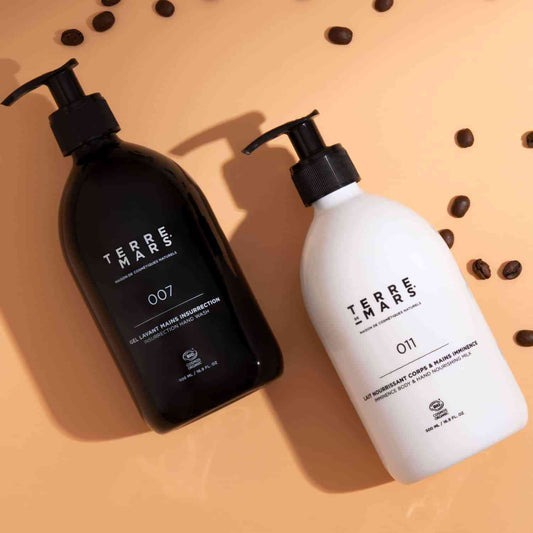
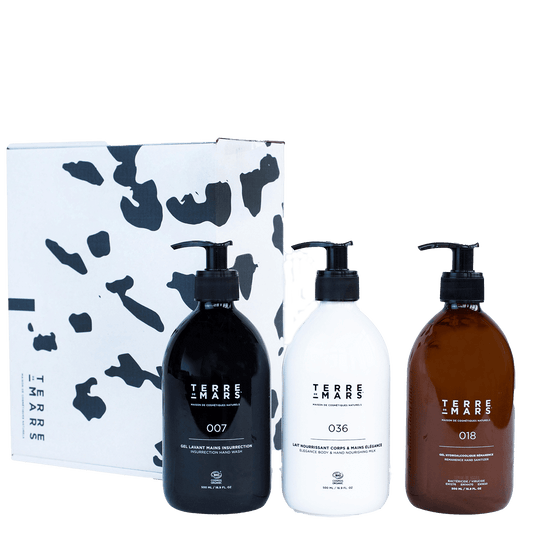
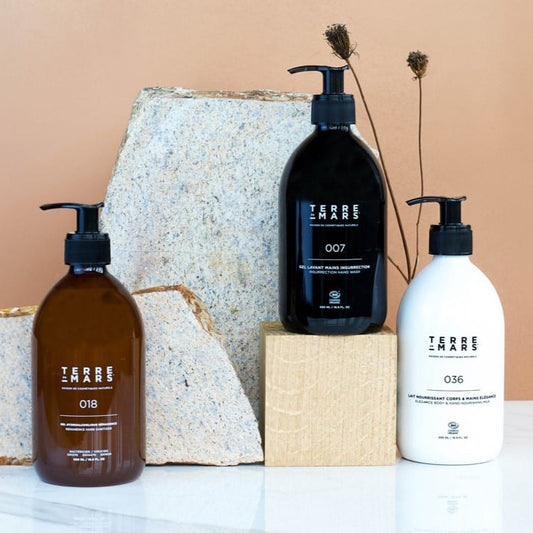
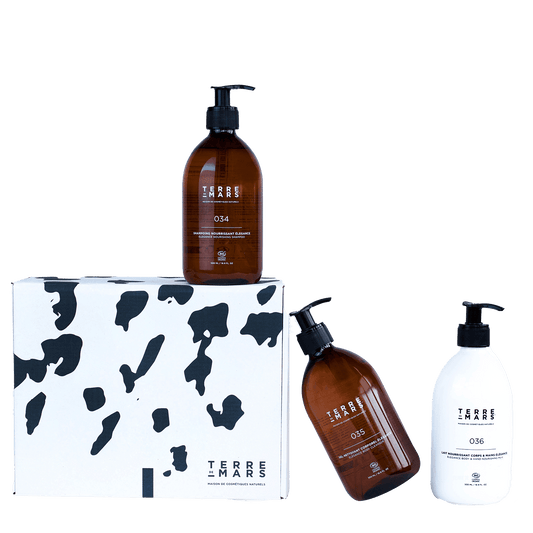
- For body and hands, the hydrating effect was measured by corneometry on the Reddition Body Cleansing Gel, the Insurrection Hand Wash Gel and the Elégance Body Cleansing Gel, three cleansing products designed to clean without stripping.
Each product page includes the results that apply to it, along with the laboratory and protocol used. That way, you can trace each number back to its source, which remains the best guarantee of trust. This transparency also applies to our professional partners: the businesses discovering our Hospitality offer rely on the same proof as you do.
Discover our offer for professionals
What scientific proof will never replace
Measurement answers one question: does the skincare product work? It leaves another dimension untouched: pleasure. A skincare ritual is lived as much as it is proven, and no probe will ever measure the appeal of a fragrance or the comfort of a gesture repeated every morning.
This is where coffee takes its full place again. It inspired the house, it structures our formulas and fragrances, and it carries an intimate memory, that of a gesture passed down from generation to generation. Science validates efficacy; coffee gives the ritual its reason for being. To explore this raw material and the active ingredients that accompany it, browse our page dedicated to ingredients.